
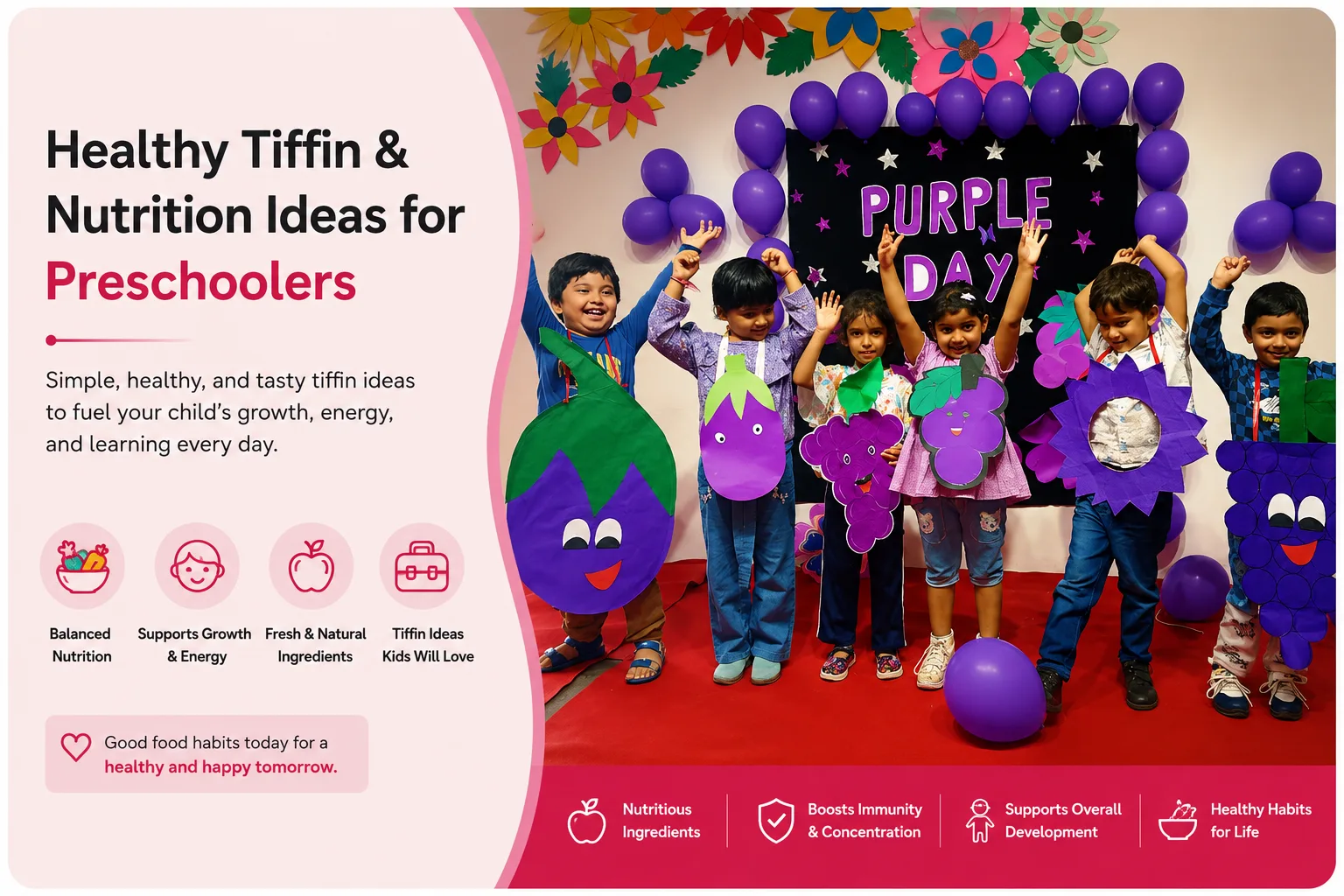
For many parents, packing a preschooler's tiffin box each morning becomes a small daily puzzle: something nutritious enough to genuinely fuel a busy morning of play and learning, but also appealing enough that a young, often selective eater will actually finish it. This guide offers practical, preschool-friendly tiffin ideas and general nutrition guidance, along with a few broader principles worth keeping in mind.
Why Tiffin Nutrition Matters at This Age
Preschool-aged children are in a period of rapid physical and cognitive growth, and a well-balanced mid-morning meal plays a genuinely important role in supporting sustained energy, concentration, and mood throughout an active school morning. Young children have relatively small stomach capacity but high energy needs, which is part of why smaller, nutrient-dense meals tend to work better than large, infrequent ones. At the same time, it is worth approaching tiffin planning with realistic expectations — preschoolers are famously inconsistent eaters, and this is a normal part of early childhood eating behaviour.
General Principles for a Balanced Tiffin
- Aim for variety across the week, not perfection in a single box. No single tiffin needs every food group in perfect balance — what matters more is a reasonably varied pattern across several days.
- Combine a source of energy, protein, and freshness. A simple framework: a carbohydrate-based base (roti, rice, whole-grain bread), a protein source (paneer, dal, egg, or yoghurt), and something fresh (fruit or lightly cooked vegetables).
- Keep portions genuinely age-appropriate. Small, easily manageable portions a young child can finish independently are more effective than a large box that goes back home discouraging.
- Prioritise foods your child can eat independently. Foods that are easy to pick up, bite, and chew without significant adult assistance work better for the tiffin format.
- Be mindful of choking hazards. Whole grapes, whole nuts, and hard raw vegetable chunks should generally be cut, halved, or prepared appropriately for a young child.
- Check the school's specific food policies. Many preschools maintain guidelines around nut-free environments or sugar limits — it is always worth confirming your specific school's tiffin policy directly.
Simple, Practical Tiffin Ideas
- Vegetable-stuffed paratha with a small side of yoghurt — an energy-dense base combined with a simple protein and probiotic addition.
- Mini idlis or dhokla with a small portion of mild chutney — soft, easy to bite, and naturally portion-sized for small hands.
- Cheese and vegetable sandwich, cut into small, manageable triangles.
- Boiled sweet corn or steamed vegetable cubes with a light seasoning.
- Fruit slices — apple, banana, or seasonal fruit — cut into bite-sized, manageable pieces.
- Homemade vegetable cutlets or tikkis, lightly pan-cooked.
- A small portion of plain or lightly flavoured yoghurt with fruit mixed in.
Managing a Selective Eater
Selective or "picky" eating is extremely common among preschool-aged children, and rarely something to be overly concerned about, provided overall growth and energy levels remain healthy. A few strategies parents often find helpful: offer familiar foods alongside new ones rather than replacing them entirely, involve your child in simple food choices, avoid turning tiffin time into a source of pressure, and stay consistent even through inconsistent eating — a food rejected repeatedly may still eventually be accepted with continued, low-pressure exposure.
Tiffin & Mealtime Routine at Red Butterfly
At Red Butterfly Play School & Day Care in NBCC Heights, Sector 89, the preschool day operates on a half-day schedule, with children generally bringing their own tiffin from home for snack and meal times during structured preschool hours — an approach that allows families to accommodate specific dietary preferences, allergies, or cultural food practices directly. Children enrolled in After School Care are also expected to bring their own food and snacks from home; parents are encouraged to discuss timing and any allergy precautions with the school office. Snack and meal times are treated as an important part of the daily routine, supporting healthy eating habits, table manners, and growing independence.
Frequently Asked Questions
How much food should a preschooler's tiffin actually contain?
This varies by child, but a good general guide is a portion your child can realistically finish within the allotted snack or meal time — smaller, well-balanced portions tend to work better than large ones that go mostly untouched.
Is it a problem if my child eats the same tiffin items repeatedly?
Occasional repetition is entirely normal and not a cause for concern, provided the overall diet across the week remains reasonably varied and balanced.
Does Red Butterfly have specific tiffin guidelines, such as nut-free policies?
Parents are encouraged to confirm the school's current tiffin and food-safety guidelines directly with the office, as these are designed to protect all children in the classroom, including those with specific allergies.
What if my child refuses to eat their tiffin at school?
Occasional refusal is common at this age and generally not a significant concern on its own. If this becomes a persistent pattern, it is worth discussing with your child's teacher.
A Final Note
Packing a nutritious, appealing tiffin for a preschooler is as much an ongoing, evolving process as it is a fixed formula. Approaching it with patience, variety, and realistic expectations tends to serve both parent and child far better than striving for a "perfect" tiffin every single day. Parents in Sector 89, Hayatpur, and the surrounding Gurugram community are welcome to discuss meal and tiffin arrangements directly with the Red Butterfly team.
This article is intended for general informational purposes and does not replace personalised nutrition guidance from a paediatrician, particularly for children with specific allergies or medical dietary needs.