
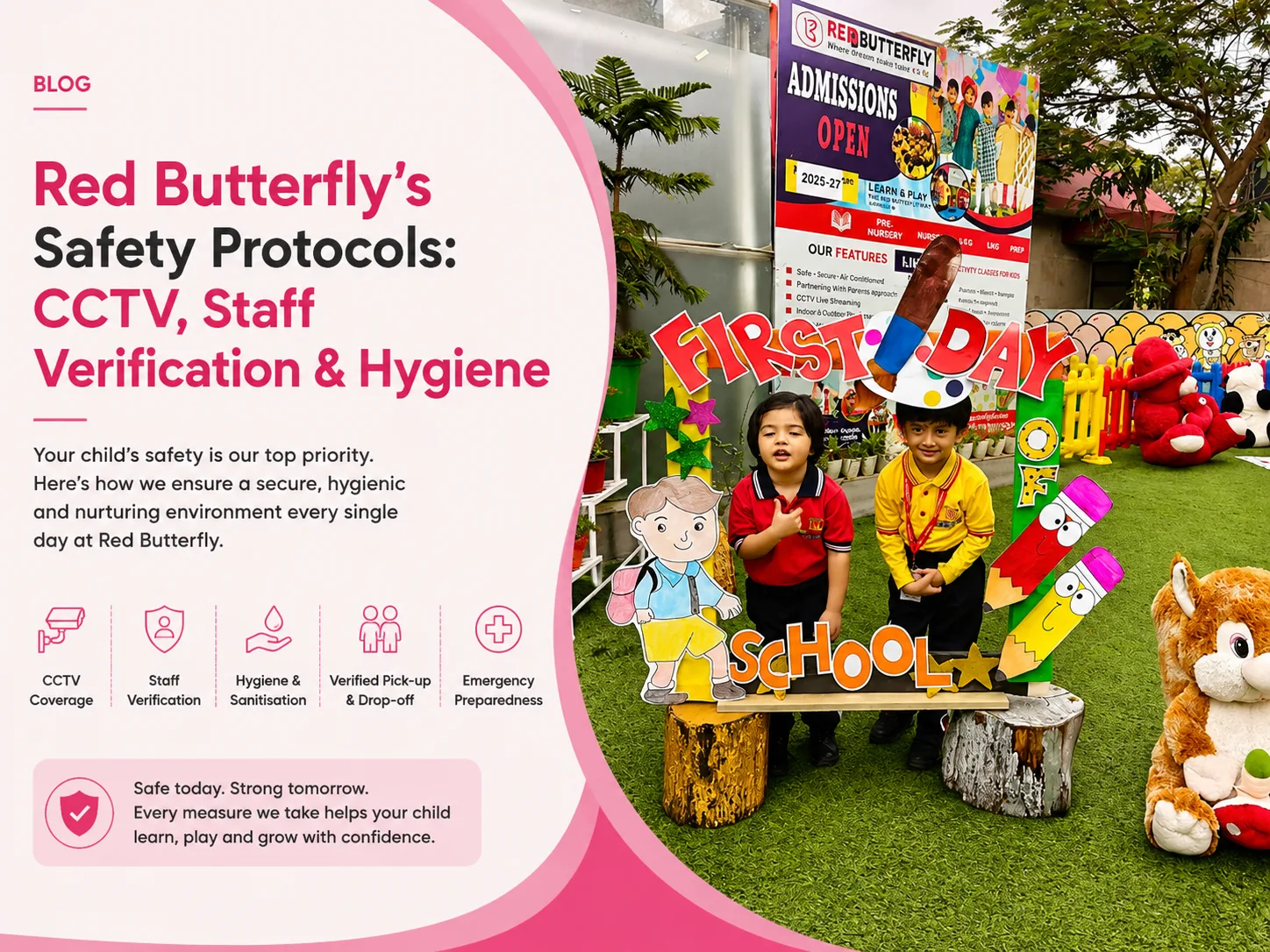
When parents evaluate a preschool or after-school care, safety is rarely just one consideration among many — it is usually the foundation every other decision rests on. A school can offer the most engaging curriculum in the world, but if parents cannot trust that their child is genuinely safe and well cared for, none of the rest matters. This article looks in detail at the safety protocols in place at Red Butterfly Play School & Day Care in NBCC Heights, Sector 89, Gurugram, covering CCTV coverage, staff verification, hygiene practices, and emergency preparedness. It complements our earlier piece on CCTV and everyday safety, going further into staff qualifications, transport, and emergency planning.
Why We Believe Safety Should Be Explained, Not Just Claimed
Many preschool websites list "safety" as a bullet point among general facility features, without much specific detail behind it. Parents deserve more than a general claim — they deserve a clear explanation of exactly what safety measures are in place, how they function day to day, and what happens if something goes wrong. This article is written in that spirit.
CCTV Coverage Across the Campus
Red Butterfly's campus is monitored through an extensive CCTV system, with approximately twenty camera points positioned across classrooms, common areas, entry and exit points, and outdoor play spaces. This coverage supports continuous, campus-wide visibility throughout the school day, from the moment children arrive in the morning through to departure. CCTV serves two functions at once: it supports staff accountability and consistent classroom practice, and it offers a documented record that can be reviewed if any specific concern needs to be looked into.
Staff Qualifications and Presence
Safety on any campus depends as much on the people present as on physical infrastructure. Red Butterfly's teaching staff hold recognised early-childhood education qualifications, including NTT (Nursery Teacher Training) and B.Ed credentials, and take part in regular, ongoing training as part of the school's professional development process.
Across its Pre-Nursery and Nursery classrooms, the school maintains a teacher-to-child ratio of approximately 2:15 — narrowing to 2:20 in LKG and UKG, and 1:20 in the Mini Marvels (Prep) stage — considerably below the 30:1 ceiling mandated nationally under NEP 2020. A lower ratio supports safety directly, not just learning outcomes: fewer children per adult means faster response times, closer supervision, and meaningfully reduced risk of a child going unnoticed, even briefly, during transitions between activities.
Verified Pick-Up and Drop-Off Procedures
One of the most practical safety measures at any preschool is a verified pick-up system, ensuring a child is released only to a parent, guardian, or specifically authorised individual. Red Butterfly maintains structured pick-up verification as standard daily practice, particularly during busier arrival and departure windows when several families are present at once. Parents are encouraged to keep the school's records of authorised individuals current, and to inform the office in advance of any change to a child's usual pickup arrangement.
Transport Safety
For families using the school's transport facility, safety extends beyond the campus itself. Children travelling by the school van are accompanied by both a teacher and a nanny throughout the journey, rather than being left in the care of a driver alone — an additional layer of supervision during the commute to and from school.
Hygiene and Sanitisation Routines
Health and hygiene are an equally important part of a safe campus, particularly for young children who are still developing consistent personal hygiene habits. Red Butterfly follows a structured cleaning and sanitisation routine conducted twice daily across classrooms and common areas, alongside consistent hygiene practices around meal times and washroom use. Classroom furniture throughout the campus is selected with rounded, corner-protected designs suited to an active, exploratory age group, reducing the everyday risk of minor injury that comes with normal childhood movement and play.
Emergency Preparedness
Genuine safety planning means preparing for situations no parent wants to think about, but every responsible school must plan for regardless. Red Butterfly conducts regular fire drills as part of ongoing emergency evacuation preparedness, so both staff and children are familiar with evacuation procedures well before they might ever be needed. First-aid provisions are maintained on campus, and the school follows established procedures for handling medical situations, in line with applicable safety and childcare guidelines for educational institutions.
Climate-Appropriate, Child-Safe Infrastructure
Physical comfort and safety go hand in hand. Red Butterfly's classrooms are air-conditioned and heater-equipped, maintaining a stable environment across Gurugram's considerable seasonal temperature range. Washroom facilities are child-friendly and separated for boys and girls, and the outdoor play area uses soft, artificial-grass surfacing with shaded natural cover, reducing common outdoor safety risks while still allowing children full, active use of the space.
Keeping Parents Informed
Safety is not only about physical infrastructure and procedure — it also depends on clear, consistent communication with parents. Red Butterfly maintains ongoing parent communication through the Schoolpad app, used for daily updates and photo sharing, supplemented by WhatsApp groups and quarterly parent-teacher meetings, so parents are never left guessing about their child's day and have a direct channel to raise questions or concerns as they arise.
Frequently Asked Questions
How many CCTV cameras are on campus, and where are they located?
Approximately twenty CCTV points are positioned across classrooms, common areas, entry and exit points, and outdoor play spaces, supporting continuous supervision throughout the school day.
What qualifications do Red Butterfly's teachers hold?
Teaching staff hold recognised early-childhood credentials such as NTT or B.Ed, and take part in ongoing, regular training as part of the school's professional development approach.
How is my child's pickup verified?
Only parents, guardians, or individuals specifically authorised at the time of admission are permitted to collect a child, verified as part of the school's standard daily procedure.
How often are fire drills conducted?
Fire drills are conducted regularly as part of ongoing emergency evacuation preparedness, so both staff and children build familiarity with evacuation procedures over time.
How will I know how my child's day went if I cannot be on campus?
Through the Schoolpad app, which provides daily updates and photo sharing, along with WhatsApp groups and quarterly parent-teacher meetings for more detailed discussion.
Is the transport facility supervised, or just the driver?
Children travelling by the school van are accompanied by both a teacher and a nanny for the duration of the journey, in addition to the driver.
An Open Invitation to Verify This Directly
We would encourage every parent, regardless of which school they are considering, not to take safety claims on faith alone. Visit the campus, ask to see the CCTV coverage and classroom layout directly, and speak candidly with the admissions team about pick-up procedures, staff qualifications, and emergency planning. A school that welcomes these questions openly, and answers them specifically, is one that takes this responsibility seriously in practice, not just in its marketing material.
Families in Sector 89, Hayatpur, and the wider Gurugram community are welcome to visit Red Butterfly to see these safety measures firsthand.