
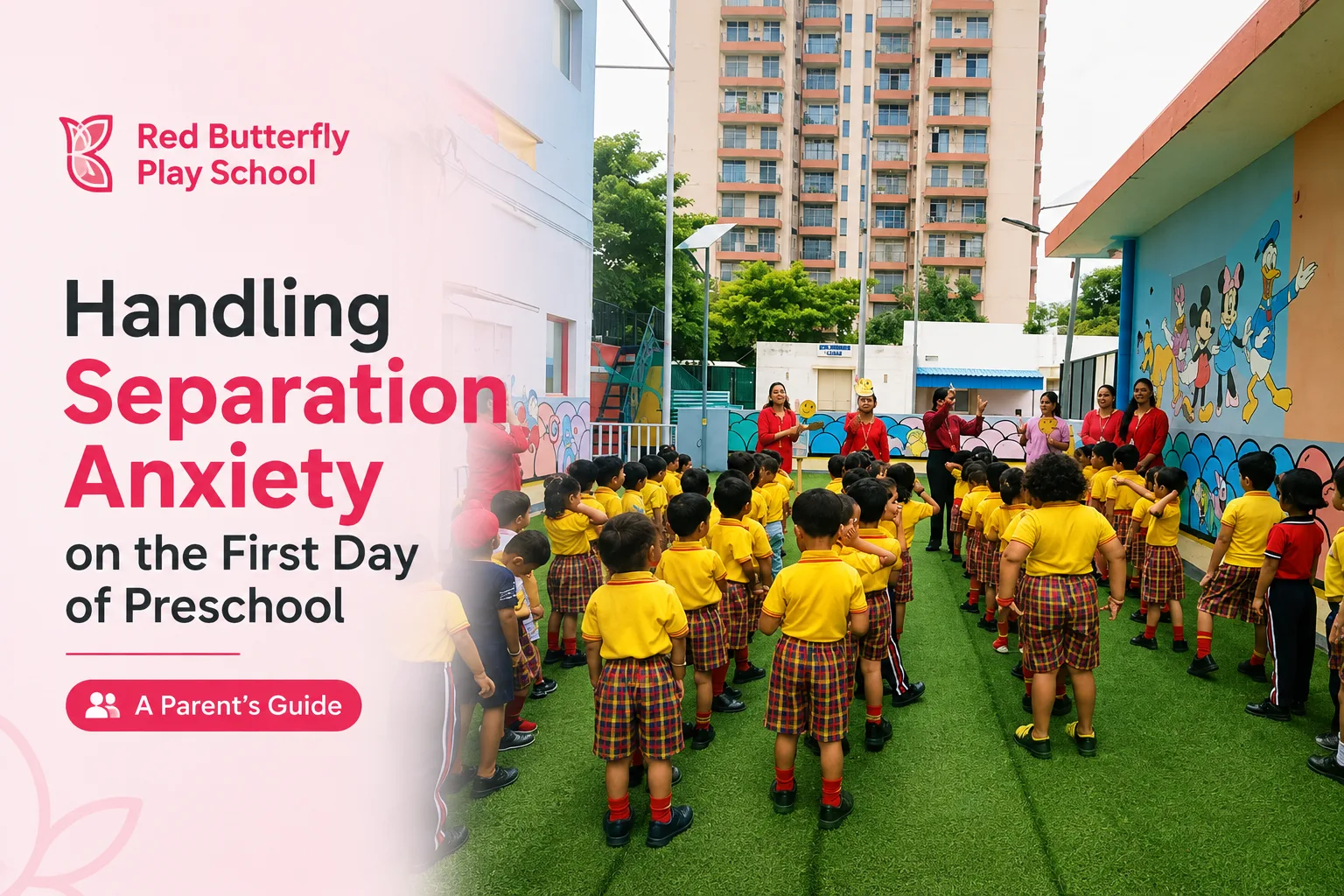
For many young children, the first day of preschool marks the very first time they are away from a parent or primary caregiver for an extended stretch of the day. It is entirely natural — and, in fact, developmentally expected — for this transition to bring some tears, clinginess, or resistance, both from the child and, quite often, from the parent as well. This article looks at why separation anxiety happens, what a healthy settling-in process typically looks like, and practical ways parents and teachers can work together to make the transition smoother.
Why Separation Anxiety Happens
Separation anxiety in early childhood is not a sign that something is wrong — it is, in most cases, a normal and healthy part of a child's emotional development. Young children, particularly between the ages of one and four, are still developing what psychologists refer to as "object permanence" in its emotional form: the understanding that a parent who has left the room, or the building, still exists and will return. Even once this understanding is broadly in place, the emotional experience of separation can still feel genuinely distressing to a young child, simply because their capacity to self-regulate and reason through uncertainty is still developing.
It is also worth noting that separation anxiety does not always appear immediately. Some children settle in without difficulty on day one, only to experience a wave of anxiety a week or two later once the novelty has worn off and the reality of a daily routine sets in. Others may show clear distress from the very first drop-off. Both patterns are common, and neither indicates that a child is struggling more than their peers.
What a Healthy Settling-In Process Looks Like
Most children who experience separation anxiety at the start of preschool settle in meaningfully within the first two to four weeks, though this timeline varies from child to child. A gradual reduction in distress — shorter periods of crying, quicker recovery after a parent leaves, growing interest in classroom activities — is generally a good sign that the process is moving in the right direction, even if it does not disappear all at once.
Teachers experienced in early childhood settings are typically well-practised in supporting this transition, using consistent routines, gentle redirection toward engaging activities, and reassurance that helps a child build trust in the new environment over time.
Practical Strategies for Parents
- Keep goodbyes brief and consistent. As difficult as it can feel in the moment, lingering at drop-off — repeated goodbyes, returning to check in, or visible parental distress — tends to prolong a child's anxiety rather than ease it. A short, warm, predictable goodbye ritual followed by a prompt, confident departure generally helps children settle more quickly than an extended farewell.
- Establish a consistent morning routine. Predictability is genuinely reassuring for young children. A consistent sequence of events leading up to drop-off — the same breakfast routine, the same order of getting dressed, the same words used to describe what is about to happen — helps a child mentally prepare for the transition ahead.
- Talk about preschool positively, in advance. In the days leading up to the first day, or during the early settling-in weeks, speaking about preschool in a warm, matter-of-fact way — describing specific things the child might enjoy — can help build a sense of anticipation rather than dread.
- Allow a comfort item, if permitted by the school. Many preschools allow a small, familiar comfort object — a soft toy, a family photograph, or a favourite small item — to accompany a child during the settling-in period.
- Avoid sneaking away without saying goodbye. While it may seem like the easier option in the moment, leaving without a goodbye can undermine a child's developing trust, making future separations more difficult rather than less.
- Communicate closely with the teacher. Teachers who are aware of a child's specific triggers, comfort strategies, or home routines are far better equipped to support a smooth settling-in process.
What Parents Can Expect from Red Butterfly During Settling-In
At Red Butterfly Play School & Day Care in NBCC Heights, Sector 89, teachers work closely with each child during the settling-in period, using a calm, consistent, and patient approach rather than rushing the process. With a teacher-to-child ratio of approximately 2:15 in Pre-Nursery and Nursery, classrooms are structured to allow individual attention during this adjustment window — a genuinely important factor, since a child experiencing separation anxiety benefits enormously from a teacher who has the capacity to notice and respond to their specific needs, rather than managing a large group alone.
Parents are kept informed through the Schoolpad app, with daily updates and photo sharing that can offer real reassurance during the early weeks, alongside open communication with the classroom teacher for any specific concerns that arise.
When Separation Anxiety May Need Extra Attention
While most separation anxiety at the start of preschool resolves naturally within the first few weeks, there are situations where it is worth having a more detailed conversation with the school and, if needed, a paediatrician — for example, if distress remains severe and unchanging well beyond the typical settling-in window, or if it is accompanied by other significant changes in eating, sleeping, or behaviour at home. In most cases, however, this is simply part of a completely normal developmental process, and patience, consistency, and close communication between parents and teachers are the most effective tools available.
Frequently Asked Questions
Is it normal for my child to cry every single day at drop-off for weeks?
While most children show gradual improvement within two to four weeks, some do continue to experience daily distress at drop-off for a longer period before settling fully. What matters most is the overall trajectory — are the tears becoming shorter, and does the child recover and engage more quickly once the parent has left? A teacher who spends the day with your child is often best placed to reassure you on this front.
Should I stay in the classroom longer to help my child settle?
In most cases, a brief, confident goodbye is more effective than a prolonged presence in the classroom, even though it can feel counterintuitive. Extended parental presence can sometimes make the eventual separation more difficult, rather than easier.
What if my child seems fine at drop-off but cries later in the day?
This is common and does not necessarily indicate ongoing separation anxiety — it can simply reflect tiredness, hunger, or the natural ebb and flow of a young child's emotional regulation across a long day. Teachers are generally well-equipped to soothe and redirect these moments.
Can I call the school to check on my child during the day?
Most preschools, including Red Butterfly, welcome a brief check-in call if a parent is particularly concerned, especially during the first few days. That said, frequent calls can sometimes unintentionally signal anxiety back to the child if they are within earshot, so a quiet, discreet enquiry with the front office is usually the better approach.
A Reassuring Final Note
Separation anxiety, however difficult it feels in the moment, is one of the most universal experiences of early childhood — nearly every parent and child moves through some version of it. With a consistent routine, a patient and attentive teaching team, and open communication between home and school, the vast majority of children settle into a genuine sense of comfort, curiosity, and even excitement about their preschool days within a matter of weeks.
Parents in Sector 89, Hayatpur, and the surrounding Gurugram community are welcome to discuss settling-in support directly with the Red Butterfly admissions team.
This article is intended for general informational purposes. If separation anxiety appears unusually severe, persistent, or is accompanied by other significant behavioural changes, parents are encouraged to speak with their child's paediatrician for personalised guidance.