
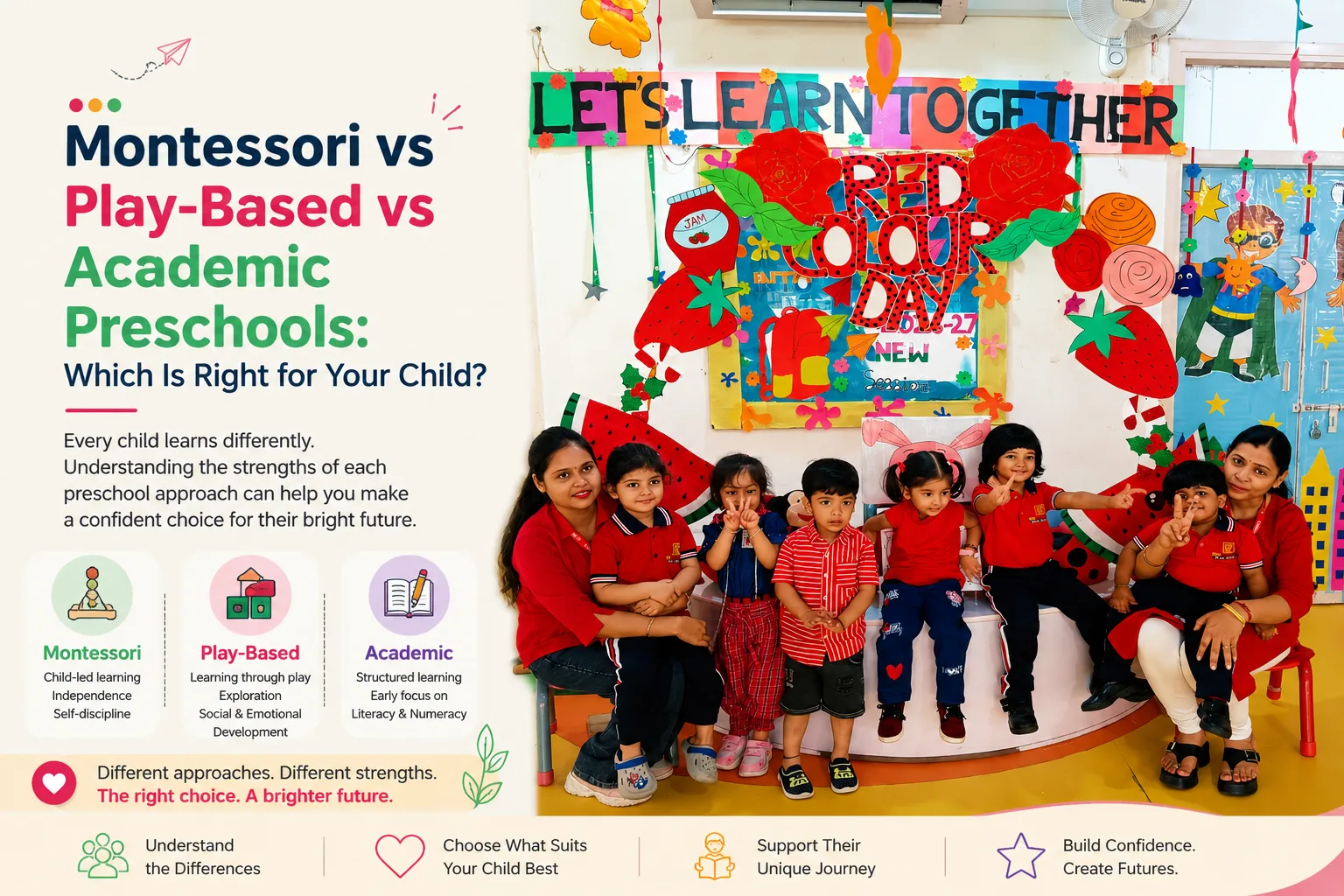
Among the many decisions parents face when choosing a preschool, few generate as much confusion as the question of curriculum philosophy. Should you look for a Montessori school? A play-based programme? Something more academically structured? These terms are often used loosely, in ways that make genuine comparison difficult. This guide breaks down what each approach actually means, where they overlap, and how to think through which philosophy might suit your child best.
Why This Question Is Harder Than It First Appears
Part of what makes this comparison genuinely tricky is that these are not always mutually exclusive categories. Many preschools describe themselves as "Montessori-inspired" while implementing only some elements of the original methodology, and many "play-based" schools also introduce structured academic content in age-appropriate ways. Understanding the underlying principles of each approach, rather than relying on labels alone, tends to be far more useful when evaluating a specific school.
Montessori Education: Core Principles
Montessori education is built around child-led learning within a carefully prepared environment, specialised self-correcting learning materials, mixed-age classrooms, and long, uninterrupted blocks of independent work time. Where it excels: building independence, self-discipline, and intrinsic motivation, and developing fine motor skills through specifically designed materials. Considerations: authentic implementation requires specific teacher training and can be resource-intensive; genuine fidelity to the method varies considerably between schools using the name.
Play-Based Education: Core Principles
Play-based education is built around the understanding that structured, purposeful play is the primary vehicle through which young children develop language, motor skills, social understanding, and early academic concepts. This is also the approach formally endorsed by NEP 2020, which establishes play-based, activity-driven learning as the core pedagogical principle for the Foundational Stage. Where it excels: building social skills through group interaction, and introducing early literacy and numeracy in an engaging, low-pressure format. Considerations: quality varies considerably depending on how deliberately structured the "play" genuinely is.
Academic Preschools: Core Principles
Academic preschools place greater emphasis on structured, teacher-directed instruction, often introducing formal literacy and numeracy content earlier and more intensively than either Montessori or play-based approaches, including more frequent use of worksheets and seated instruction time. Child development research generally cautions against overly early or intensive academic instruction, given young children's still-developing capacity for sustained attention — this approach sits less closely with NEP 2020's current guidance for the Foundational Stage.
How to Think Through the Decision for Your Child
- How does my child engage best with new experiences? A child who thrives with independent exploration may respond well to Montessori; a child who enjoys group activity and stories may do especially well in a play-based setting.
- What does the specific classroom actually look like, regardless of label? A classroom visit remains the most reliable way to judge genuine fit.
- What does current developmental research and policy guidance suggest? A genuinely structured, intentional play-based approach tends to align most closely with current evidence and NEP 2020's own guidance.
- Does the approach match your family's values and expectations? There is no universally correct answer — the right fit depends on the specific child and family.
Where Red Butterfly Fits
Red Butterfly Play School & Day Care, located in NBCC Heights, Sector 89, follows a play-based approach across its programmes — Pre-Nursery through UKG and the Mini Marvels (Prep) stage — while drawing on Montessori-influenced elements in some of its hands-on, sensory-focused activities. In practical terms, this means each day balances circle time, storytelling, rhymes, sensory activities, art and craft, music and dance, and outdoor play, with academic content introduced gradually and always through hands-on, engaging methods. A teacher-to-child ratio of approximately 2:15 in the youngest classrooms supports this approach directly, since genuinely responsive, individually attentive teaching depends on teachers having real capacity to observe and guide each child.
Frequently Asked Questions
Is one approach objectively "better" than the others?
No single approach is universally superior — each has genuine strengths, and the right fit depends heavily on the individual child, family values, and how well a specific school implements its stated philosophy.
Can a school combine elements of more than one approach?
Yes, and many do. It is increasingly common for preschools to draw selectively from Montessori materials, play-based structure, and some degree of structured academic content.
How can I tell if a school's "Montessori" or "play-based" label reflects genuine practice?
Visit the classroom directly, observe a typical activity period, and ask specific questions about how daily activities are structured and what developmental goals they target.
Does the specific philosophy matter more than the teacher?
In practice, teacher quality, attentiveness, and classroom ratio often matter as much as, or more than, the specific pedagogical label.
Making a Confident, Informed Choice
Choosing between Montessori, play-based, and more academically structured preschool philosophies is less about finding a single objectively correct answer, and more about understanding what each approach genuinely involves, observing it directly, and matching it thoughtfully to your own child's temperament. Parents in Sector 89, Hayatpur, and the surrounding Gurugram community are welcome to visit Red Butterfly to see its play-based approach in action.