
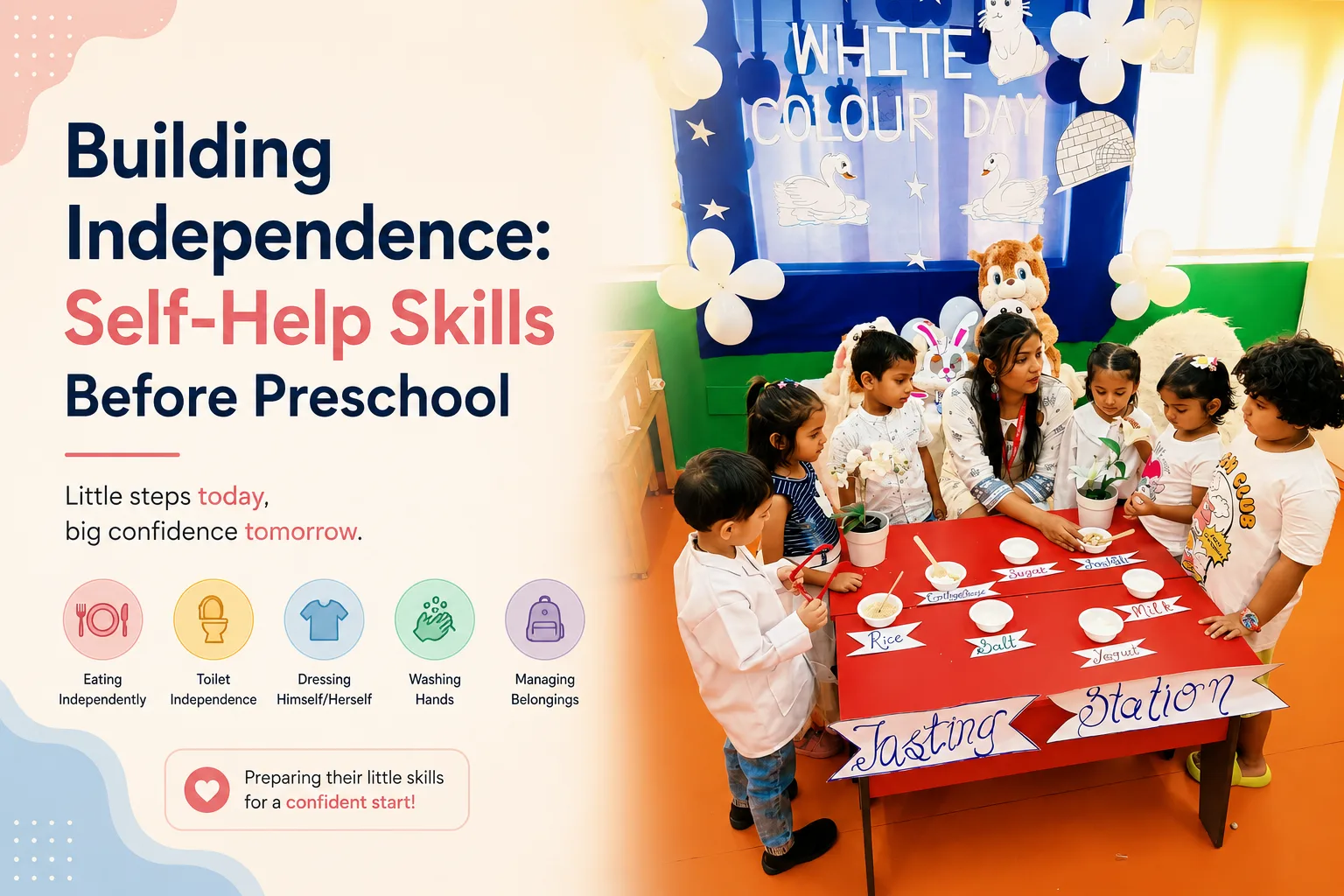
One of the more practical, and often underestimated, aspects of preschool readiness has little to do with letters, numbers, or academic content at all — it is a child's growing ability to manage basic daily tasks independently. Self-help skills such as eating without significant assistance, using the washroom with growing independence, and managing simple belongings genuinely shape how comfortably a young child settles into a classroom environment. This guide looks at which self-help skills matter most before starting preschool, and practical ways parents can support their development at home.
Why Self-Help Skills Matter So Much in a Classroom Setting
A preschool classroom, even one with a favourable teacher-to-child ratio, cannot offer the same level of individual, one-on-one assistance a child receives at home throughout the day. A child who has built some baseline independence in self-care tasks tends to adjust more comfortably to this shift — not because independence is expected to be complete before starting preschool, but because a reasonable foundation reduces daily friction, both for the child and for the classroom as a whole. It's worth being clear: preschools, including Red Butterfly, do not expect full independence across every skill before admission. Building these skills further is very much part of what preschool itself is designed to do.
Key Self-Help Skills to Build Before Preschool
- Eating independently — holding a spoon or fork, feeding oneself with reasonable consistency, and managing simple foods without significant assistance. Build this at home by offering regular self-feeding opportunities, even if messier or slower.
- Toilet independence — recognising the need to use the washroom, managing simple clothing, and washing hands afterward, becoming increasingly important as children move into Nursery and beyond. Establish a consistent, low-pressure routine and gradually reduce direct assistance.
- Dressing and undressing — pulling on trousers, putting on shoes, removing a jacket, independently or with minimal assistance. Choose clothing with simpler fastenings while practising, and allow extra time.
- Washing hands — the full sequence of wetting, soaping, rubbing, rinsing, and drying, practised consistently until comfortable and familiar.
- Managing personal belongings — recognising and caring for one's own bag or water bottle, and understanding simple organisation. Assign consistent places for belongings at home and involve children in packing their own bag.
- Following simple instructions — understanding and following a short, one-step instruction ("please put your shoes by the door"), supporting participation in classroom routines without constant individual guidance.
A Balanced Approach: Supporting, Not Rushing
It's worth emphasising that building these skills should happen at a pace appropriate to each individual child, rather than as a rushed checklist before an admission deadline. A patient, encouraging approach — allowing genuine attempts, offering specific praise for effort rather than only success, and gradually reducing assistance — tends to build lasting confidence rather than resentment or anxiety. It's also worth remembering that regression is common and normal around times of change, such as the start of a new preschool routine — not a step backward in overall development.
How Preschool Continues Building These Skills
Self-help skill development doesn't stop once a child begins preschool — a well-run classroom continues to build on this foundation actively. At Red Butterfly Play School & Day Care in NBCC Heights, Sector 89, daily routines are specifically structured to reinforce independence: children are encouraged to manage their own belongings, participate actively in hygiene routines, and take on simple, age-appropriate responsibilities as part of the classroom's daily rhythm — building on whatever foundation a child brings from home, rather than expecting it to be fully established beforehand. Our guide on managing separation anxiety covers the emotional side of this same transition.
Frequently Asked Questions
My child still needs help with most self-care tasks — should we delay starting preschool?
Generally not. Preschools, including Red Butterfly, work with children across a wide range of starting points in self-help skill development, and preschool itself often accelerates this growth through consistent daily practice and peer modelling.
How much independence is realistically expected by the time a child starts Pre-Nursery?
Very little is strictly required at the Pre-Nursery stage; teachers provide considerable support for very young children still building these foundational skills.
My child regressed on toilet independence right after starting preschool — is this normal?
Yes, temporary regression during a period of significant change or transition is common and generally resolves within a few weeks as a child settles into the new routine.
Building Confidence, One Small Task at a Time
Self-help skills may seem like small, unremarkable milestones compared to more visible academic achievements, but they play a genuinely significant role in how comfortably and confidently a young child settles into a preschool classroom. Parents in Sector 89, Hayatpur, and the surrounding Gurugram community are welcome to discuss self-help skill development and settling-in support directly with the Red Butterfly team.